How are loading metres calculated for groupage freight?
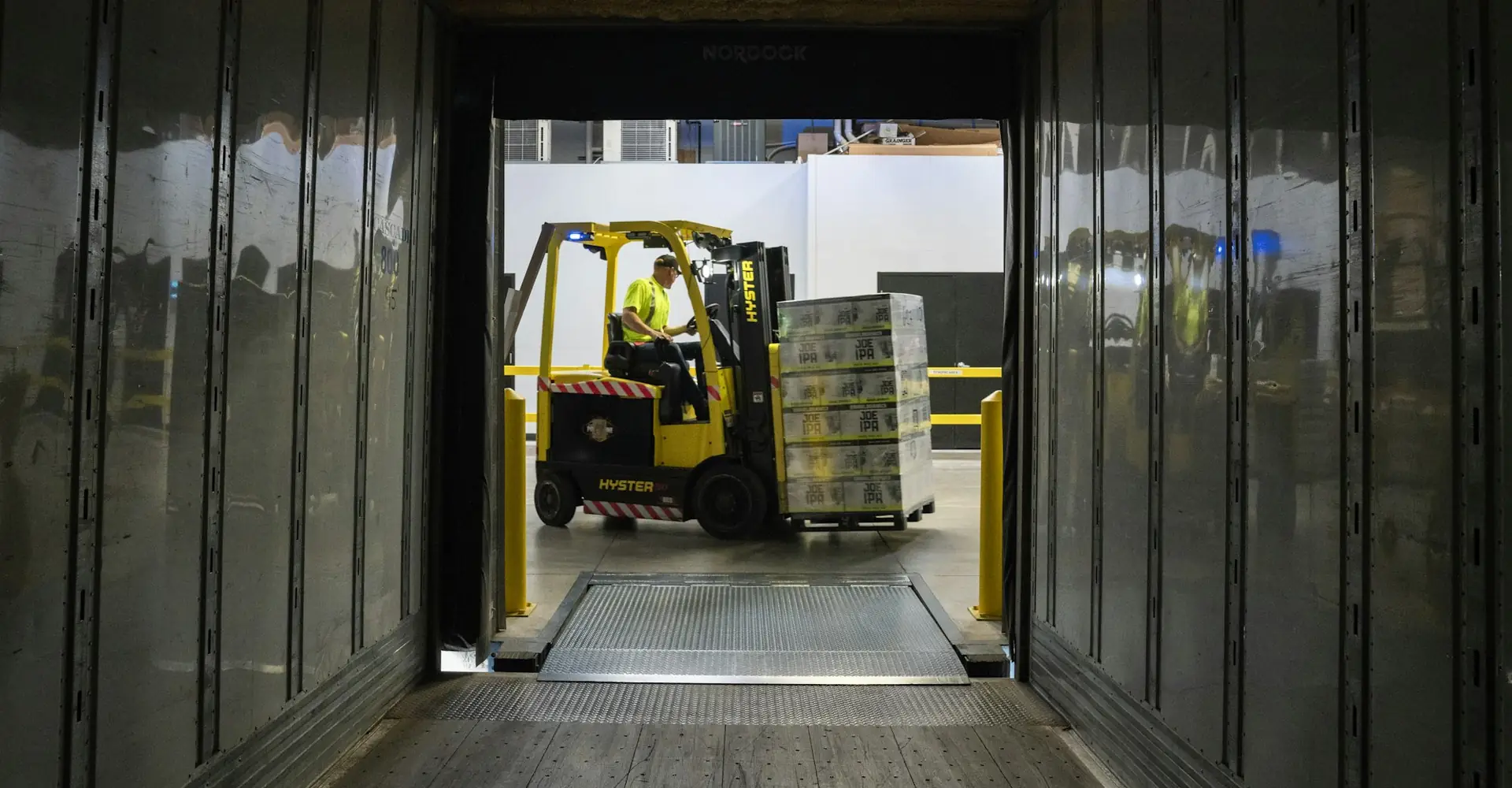
In groupage freight the price is not set by weight alone. Light but bulky cargo takes up far more trailer space than its weight suggests, so carriers calculate loading metres (LDM) and compare them with the gross weight.
The formula
The internal width of a standard trailer is about 2.4 metres. The loading metres of a pallet are its floor area divided by that width: LDM = pallet length × pallet width ÷ 2.4.
| Pallet | Size | LDM | Trailer capacity |
|---|---|---|---|
| Euro | 120 × 80 cm | 0.4 | 33 pallets |
| Industrial | 120 × 100 cm | 0.5 | 26 pallets |
A worked example
For 14 Euro pallets that cannot be stacked, 14 × 0.4 = 5.6 LDM. The industry commonly treats 1 LDM as about 1,750 kg, which gives 9,800 kg. If the gross weight of the cargo is 6,200 kg, the price is calculated on 9,800 kg.
How stacking changes the price
If your pallets can be stacked, the floor space they take up is halved and so are the loading metres. That is why stating whether pallets can be stacked, and how tall they are, has a direct effect on the price when you ask for a quote.
What to include in a quote request
- Pallet type and number
- Height and weight of each pallet
- Whether pallets can be stacked
- Loading and delivery addresses